

This post is part of a series of ambient music playlists I’ve developed for the 8 seasons of the solar year, which you can read more about here:

This third playlist in the series, “Bloom,” is meant to capture the bright bursting of light and love and aliveness that marks the arrival of spring. The birds are singing. The bees are buzzing. The buds are blooming. The pollen is…pollening.
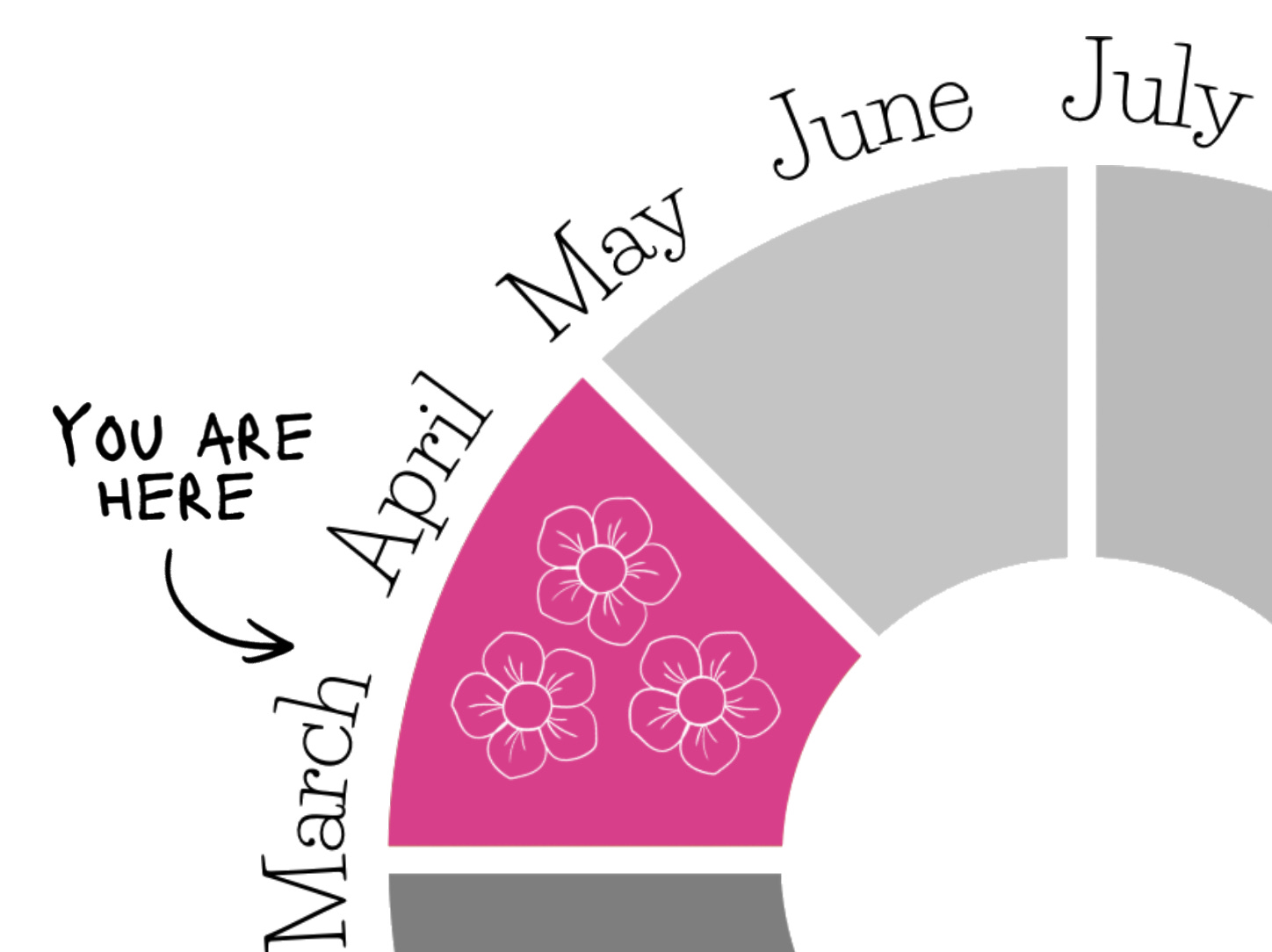
Where I live in central NC, this playlist aligns perfectly with the octant of the year that begins on the Spring Equinox, lasting from around March 21 - April 30. Having spent six years living in different parts of New York, however, I am very aware that for many people living in the northern latitudes and at higher altitudes, this blossoming season may not arrive for still quite some time.
Those who remain in the throes of the seasonal battle between the cold and the sunshine may want to revel in the “Imbolc” playlist for a little bit longer. But if you’re like me, you might need a little boost of musical optimism even if the blossoms aren’t quite out in your area yet.
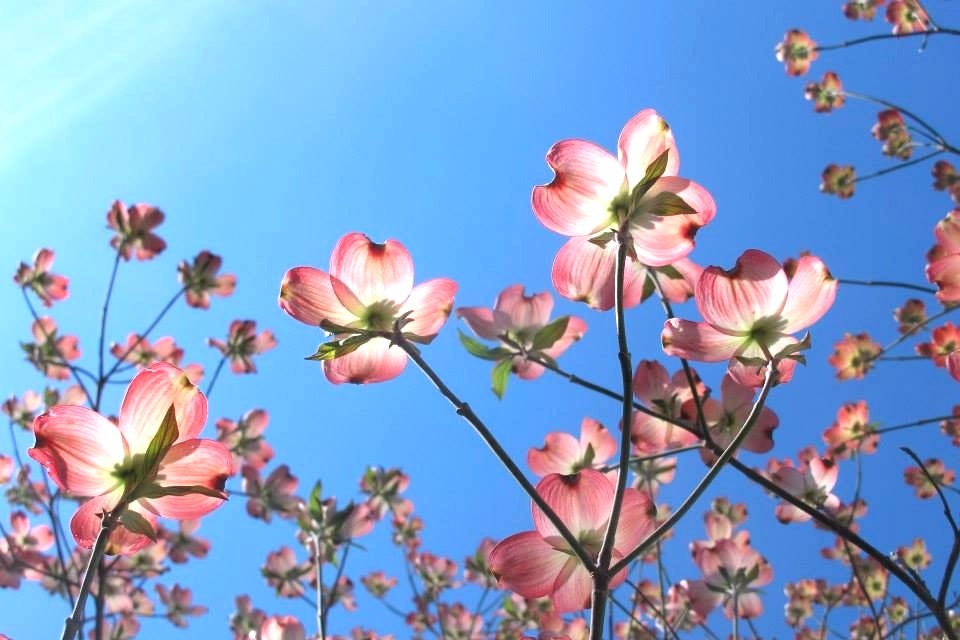
Growing up in NC, spring was something I always took for granted. I was born in early April, and my birthday week always reliably marked the blooming of the dogwood trees in my hometown of Greensboro. The beauty of spring in central NC is unparalleled, but there have been years when I have found this season to be rather tiresome — the brazen extroversion of magenta azaleas, the incessant bumbling of fat carpenter bees, the faint scent of dead fish wafting from a nearby Bradford Pear, the unrelenting cold breezes cutting through bright sunlight… not to mention the thick clouds of yellow pollen that cover everything in a blanket of sneeze.
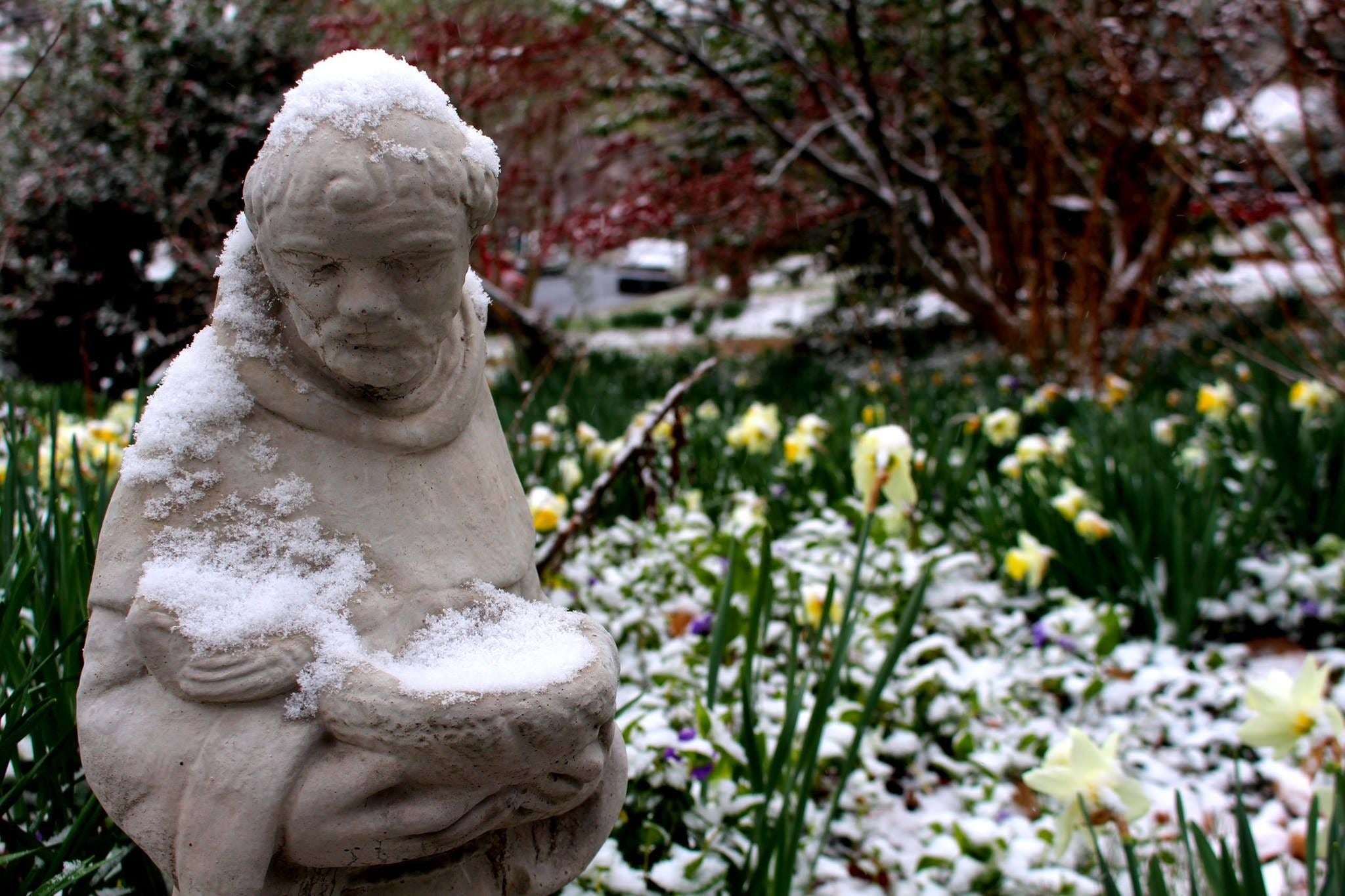
At times, all of this has been rather off-putting for my overstimulated nervous system and my more introverted and melancholic personality. I was always more of an autumn gal: drawn to the complex solemnity of colors glowing in the fading sunlight, as one last laugh in the face of death. I may have been born in the early spring, but I was also born on Good Friday, during a full moon, on a day when the fresh blossoms of spring had been covered in a rare April snow. Given that I was two weeks late, I like to think that I somehow chose this.
It wasn’t until I lived in New York that I finally learned to appreciate, and even cherish, the impudent advances of spring. Every year when my birthday rolled around, I thought about the redbuds and the cherry trees and the dogwoods already blossoming down in NC, and then looked outside to find another cloudy day with a slight drizzle and a high of 45. The season of “Bloom” is always much delayed in New York. March is still basically winter, and April is an endless slog of cold rain, overcast skies, and a general state of dreariness.
In his timeless classic Let Your Life Speak, Parker Palmer perfectly describes the woes of early spring in the northeast: “I will wax romantic about spring and its splendors in a moment, but first there is a hard truth to be told: before spring becomes beautiful, it is plug ugly: nothing but mud and muck. I have walked in the early spring through fields that will suck your boots off, a world so wet and woeful it makes you yearn for the return of ice.”
Even as Daylight Savings Time brings later sunsets, and the equinox tips the scales of solar time towards the light, in the northern latitudes, the darkness can seem to go on forever.
Then suddenly, one day… BLOOM!
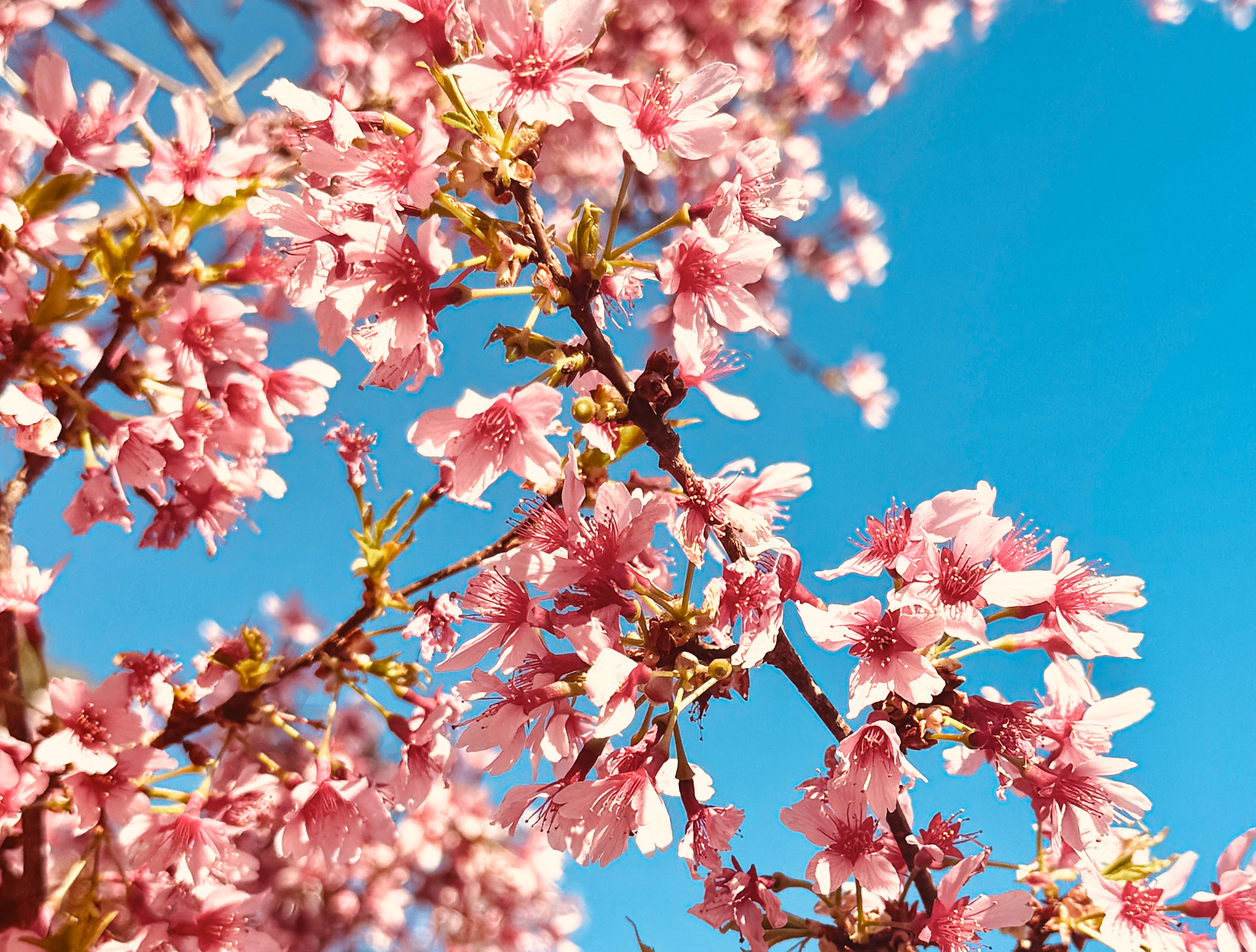
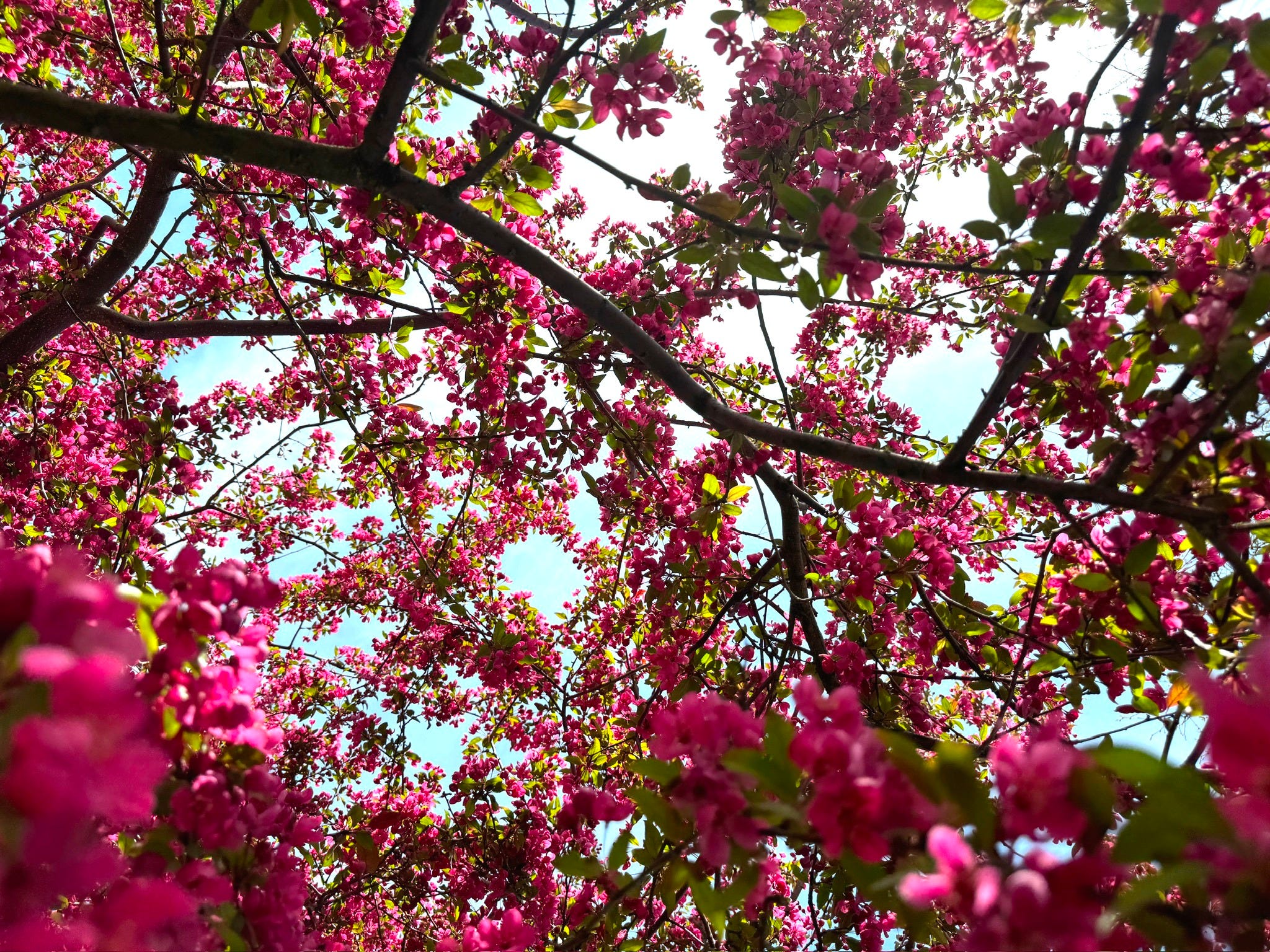
In New York, everything seems to blossom all at once. You wake up one day and find yourself in the warm embrace of the sun, with tulips and redbuds and pink magnolia trees shouting color at you from the street corners. Butterflies flutter on the breeze. Birds of every kind break their silence to sing God’s praises. Suddenly you want to remove your shoes and walk barefoot across a green lawn that is carpeted with tiny flowers. Somehow, in the midst of it, you feel as though everything is going to be okay.
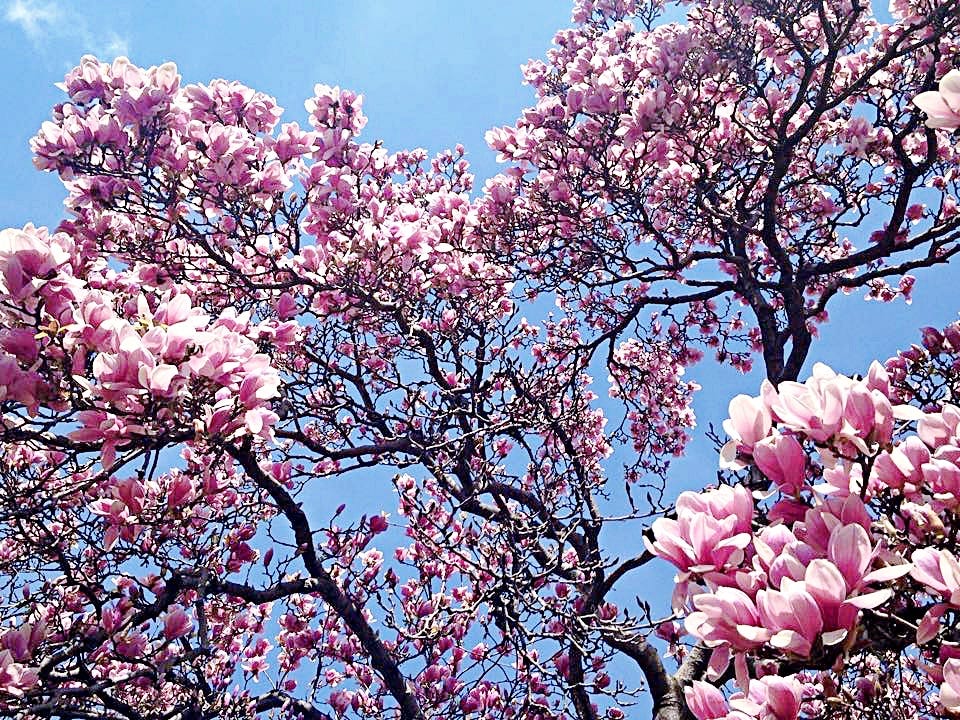
Of this moment, Parker Palmer admits, “Spring in its fullness is not easy to write about. Late spring is so flamboyant that it caricatures itself, which is why it has long been the province of poets with more passion than skill… Spring is a potlatch time in the natural world, a great giveaway of blooming beyond all necessity and reason — done, it would appear, for no other reason than the sheer joy of it. The gift of life, which seemed to be withdrawn in winter, has been given once again, and nature, rather than hoarding it, gives it all away.”
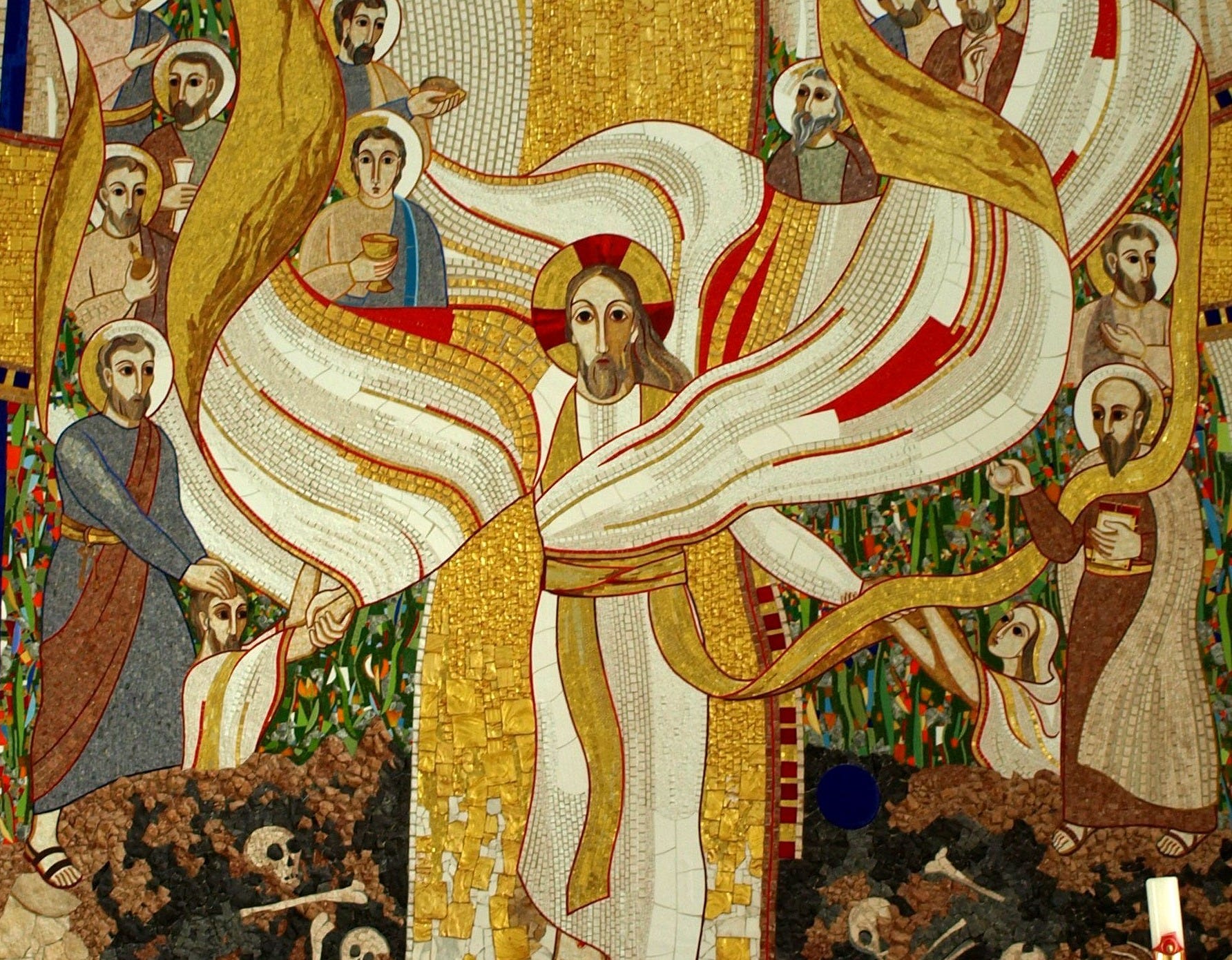
Spring is also when Christians celebrate the Great Mystery of faith in the resurrection of Jesus Christ. Its overlap with the return of light and life in the natural world tempts us with the obvious comparison, but as John Updike cautioned in his 1960 Seven Stanzas at Easter, Christ’s resurrection is “not as the flowers, each soft spring, recurrent,” but as “flesh: ours.” And so, he writes, “Let us not mock God with metaphor, analogy, sidestepping, transcendence… let us not seek to make it less monstrous for our own convenience, our own sense of beauty, lest awakened in one unthinkable hour, we are embarrassed by the miracle.”
Indeed, many Americans have reduced Christianity to a perpetual spectacle of Easter entertainment and “vibes.” But liturgical Christians still celebrate the Paschal Mystery with an entire week that is devoted to walking solemnly alongside Jesus through his betrayal, arrest, and execution. This “holy week” makes room for the full spectrum of the human emotional experience and the transforming insights that accompany this sacred narrative.
Holy Week is more than just a re-enactment of past events in the life of an important religious figure. It is a kind of liturgical time slip — a time out of time that brings us face to face with eternity. During the Paschal Triduum (Maundy Thursday, Good Friday, and Holy Saturday) linear time collapses in on itself, and we are there: at Jesus’ last supper with his friends, at his betrayal and arrest in the garden, at his sentencing and execution on a cross, and at his inexplicably empty burial tomb on the morning after the Passover.

“If we will have an angel at the tomb,” insists Updike, “make it a real angel…vivid with hair, opaque in the dawn light, robed in real linen, spun on a definite loom.” For Christians, Easter is more than just a cheerful metaphor for the return of flora and fauna. It is an exultant response to Christ’s decisive victory over Death.
In recent years, Christians have been accused of appropriating “Easter” from the pagans, but the anniversary of Christ’s resurrection has been celebrated in the spring since the earliest days of the church. Originally observed in conjunction with the Jewish Passover, which has ancient ties to the natural world and the agricultural seasons, the “official” formula for determining the date of Easter was established by an ecclesial council in Turkey in the year 325. Easter (or Pascha, as it is still called by orthodox Christians) is supposed to be held every year on the first Sunday after the first Full Moon that occurs on or after the Spring Equinox.
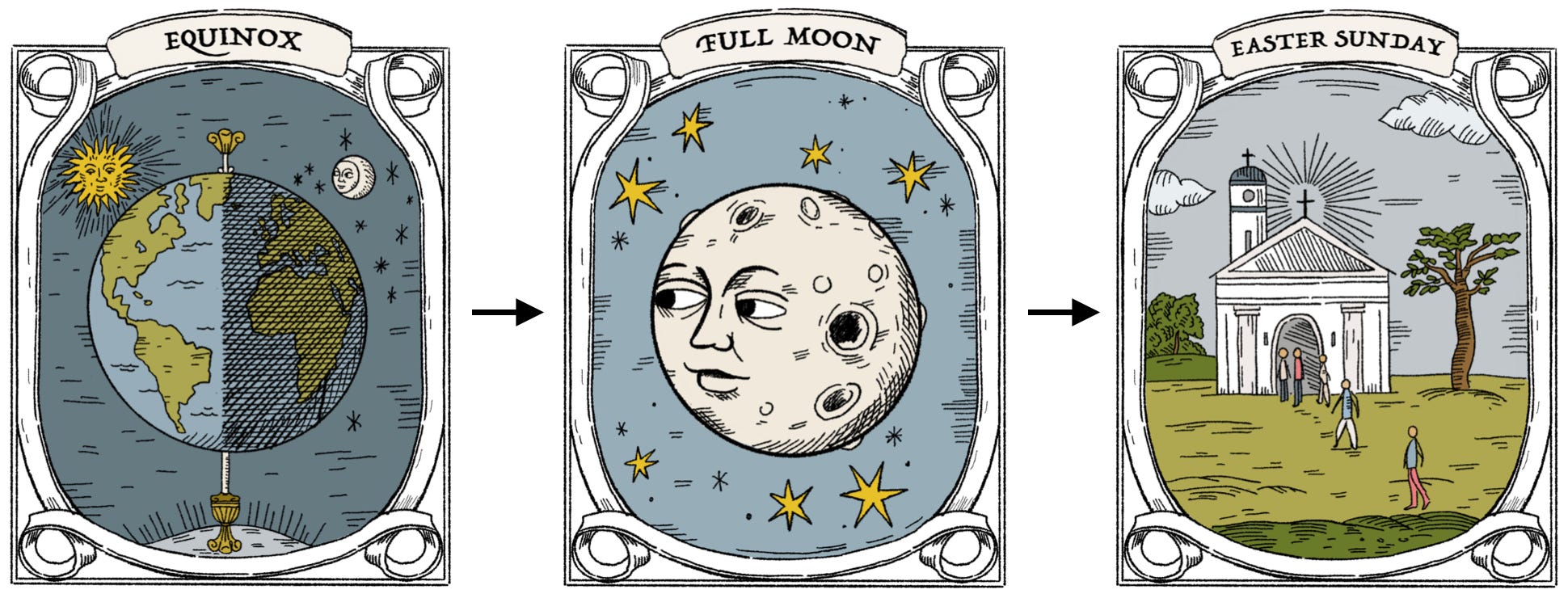
That sounds simple enough, but things have changed quite a bit over the last 1700 years, especially in terms of our ability to more precisely calculate astronomical events, not to mention the various calendar systems that different countries and cultures have adopted to determine what day it is. A variety of discrepancies now exist between the calendars of different churches and the astronomical events they reference, resulting in a situation where Christians globally do not all celebrate Easter at the same time. Efforts to resolve the matter are ongoing, and mostly face palm-inducing.
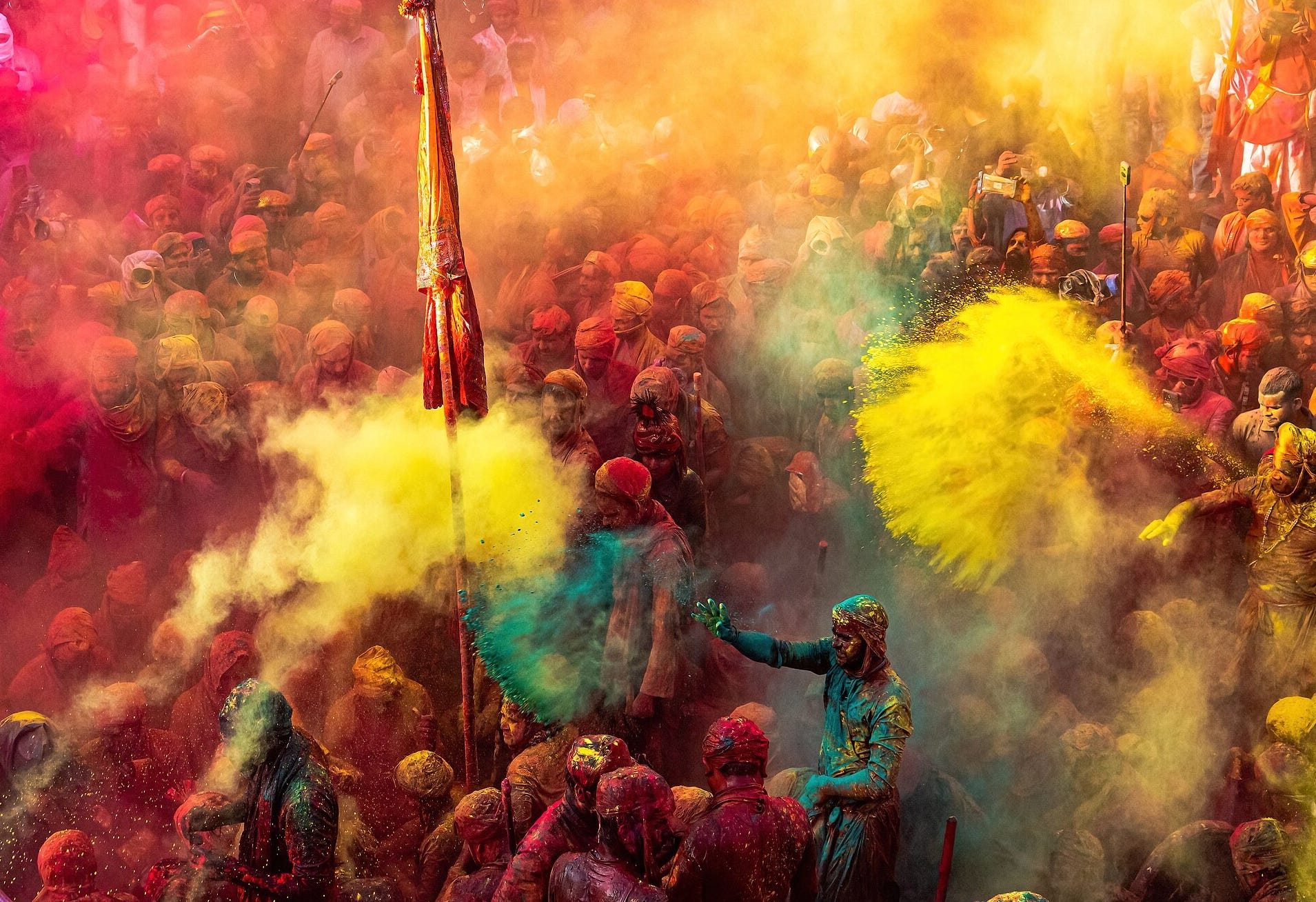
Nevertheless, the themes of resurrected life that Christians celebrate at Easter do resonate with the nearly-universal themes of rebirth, joy, and victory over darkness that are celebrated across the northern hemisphere this time of year. In Thailand, the transition to spring marks the beginning of the new year, with celebrations that include widespread jubilant water fights. Iranians also observe their new year on the spring equinox, with a holiday known as Nowruz dating back to the Zoroastrians, observed through jovial celebrations of community connection. In India, the festival of Holi marks the arrival of spring with an all-out lovefest of color, dancing, and joy that proclaims the triumph of good over evil.
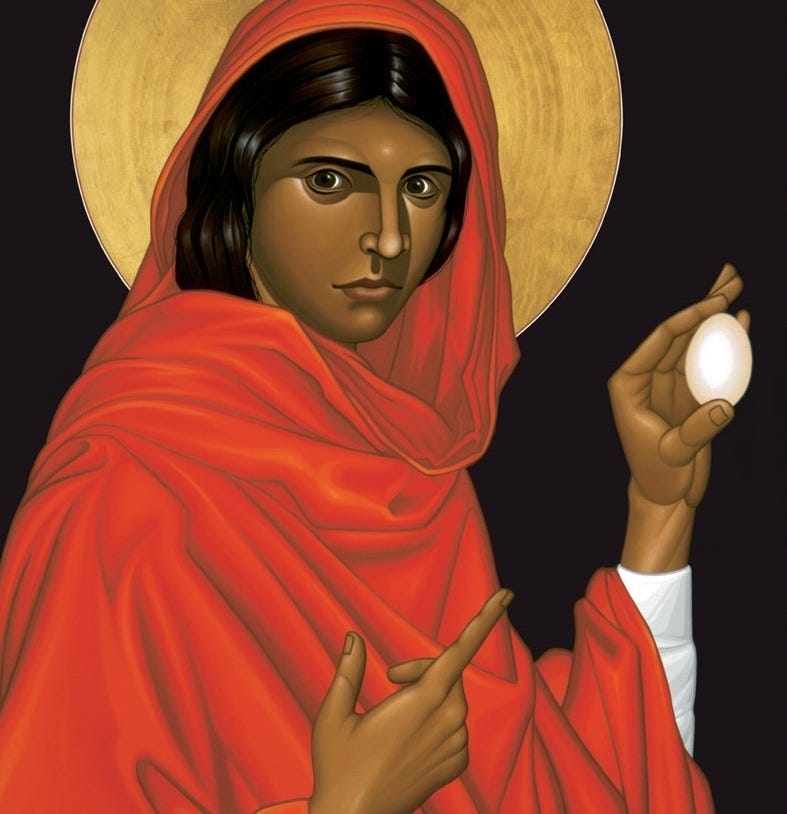
Eggs are also a common theme this time of year, as a general sign of fertility and rebirth. The Christian tradition of decorating eggs for Easter goes all the way back to the earliest days of the church, particularly in Mesopotamia. Mary Magdalene is often depicted in iconography pointing to an egg for this reason: according to ancient tradition, she used an egg as a common visual aid for the empty tomb she discovered as she traveled across Europe to preach Christ’s resurrection. In one legend, she even manages to convince Emperor Tiberius to remove Pontius Pilate from power, after an egg she was using as a teaching tool turned blood red in front of him. In the orthodox tradition, decorated eggs are painted red and blessed by priests at the end of the Easter Vigil, before being shared and cracked open as symbols of the resurrection.
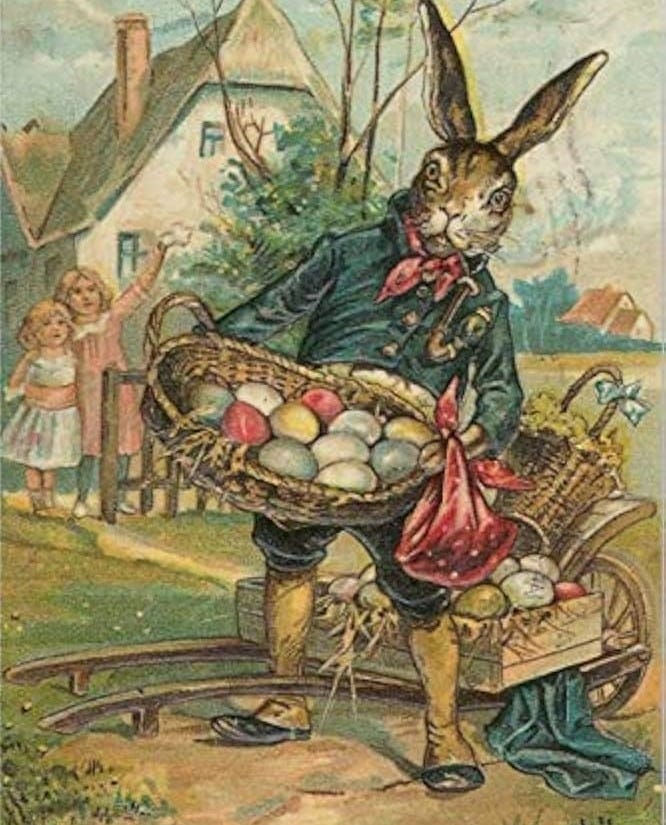
As for the Easter bunny, that myth seems to have largely been an invention of Jacob Grimm (of the Brothers Grimm), who in 1835 tried to reconstruct the notion of a pre-Christian goddess of spring named “Ostara,” based on scant evidence that has since been largely debunked. Nevertheless, this late 19th century idea influenced many German immigrants to the U.S. at the turn of the 20th century, who brought with them the tale of a hare who inexplicably laid eggs and left treats for good little boys and girls (similar to the Odin-inspired German vision of Santa Claus).
Interestingly, in the ancient world, hares were widely believed to be a “hermaphrodite” (gonosimulistic) species, capable of reproducing without any loss of their virginity. This belief was held by numerous ancient Roman scholars, including Pliny and Plutarch. While not being biologically accurate by any means, the idea led to a long standing association between hares and the Virgin Mary in medieval art and iconography.
However you choose to celebrate the return of rainbows and sunshine in your life (and however slowly they may arrive in your area!), may this playlist capture for you themes of:
the overwhelming outpouring of joy and color beyond all necessity and reason
hope rising up in you like sap, giving you new energy for creativity and play
the relentless desire to go outside, remove your shoes, bathe in the sunlight, and dance in soft grasses
the reassurance that the Creator of all things has overcome death once and for all, and that life and love will always have the final say!

Previous Playlists
Annum: Imbolc

The second playlist in the series, "Imbolc," is meant to capture the liminal transition between winter and spring. This is the seasoning of "quickening" - a time when the first kicks of new life can be felt. Where I live in central NC, this is a playlist for Feb 1st - March 21st.
Annum: Epiphany

The first playlist in the series, “Epiphany,” is meant to capture not only the season of winter, but the beginning of the new year, and the liturgical season of Epiphany. It is a playlist for January.