

This post is part of a series of ambient music playlists I’ve developed for the 8 seasons of the solar year, which you can read about here:

This fifth playlist in the series, “Midsummer,” is the longest playlist in the collection, partially because the days are longer this time of year, but also because this playlist technically covers a longer portion of the year than any of my other playlists, from roughly June 22 - August 30.
Midsummer marks the shift into the second half of the year, when the sunlight in the northern hemisphere gradually begins to wane, and the light begins to slowly fade away.
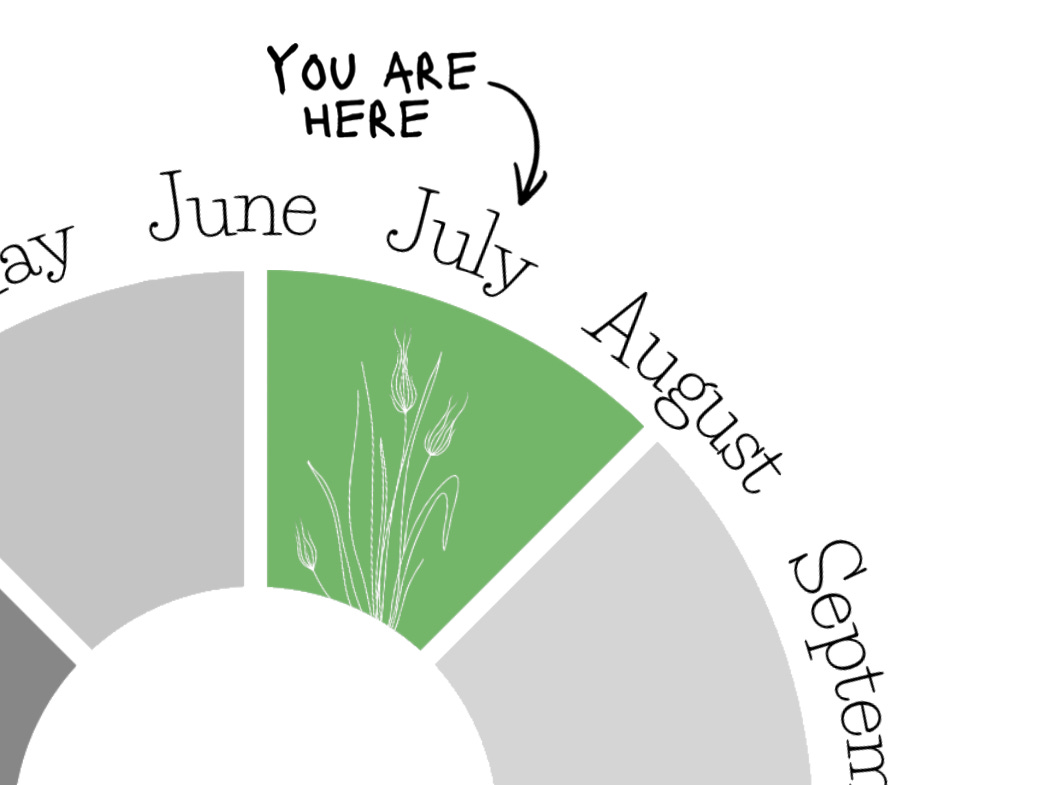
Due to the natural lag between maximum heat exposure and maximum temperature in the transfer of heat from the sun to the earth, hot summer temperatures on the earth’s surface continue well beyond the astronomical thresholds that mark the waning of the sunlight during the second half of the year. This effect has been exacerbated by climate change in recent decades, extending the summer season by about two weeks.
For this reason, the timing of the playlists in this second half of the series will no longer line up with the astronomical seasonal thresholds, but will instead be released in accordance with the agricultural and meteorological seasonal shifts as they actually occur for most people living in the northern hemisphere.

Despite modern sensibilities that have come to identify the astronomical solstice as the “official” start of summer, as NASA astronomer Dr. Koji Mukai explains in his Midsummer Day’s Rant, this designation actually makes little sense culturally or meteorologically. The agricultural start of the summer has traditionally been celebrated on or around May Day, placing the solstice at the middle of the season, not at the beginning. Indeed, this is why Shakespeare literally refers to it as “mid-summer.”
Many people throughout history have observed this significant turning point in the solar year with festive gatherings similar to those held on May Day: music, dancing, bonfires, flower crowns, and feasting on the abundance of the summer harvest.
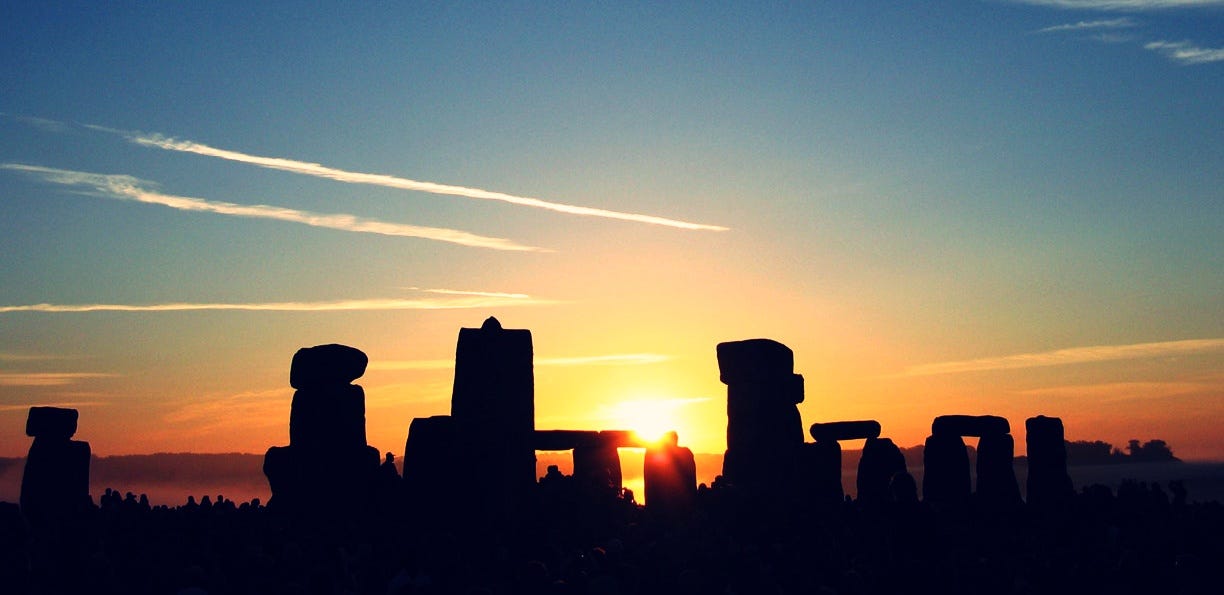
Perhaps the most famous solstice gathering is the one held each year at Stonehenge, the ancient megalithic structure constructed by Neolithic farmers in southern England to align with the sunrise on the summer solstice and the sunset on the winter solstice.
But the beauty and wonder of the solstice can be felt even more profoundly in the northernmost latitudes, where you can experience a full 24 hours of daylight this time of year. In certain parts of Iceland, Norway, Sweden, Finland, Russia, Alaska, and Canada, the sun never sets below the horizon in the weeks surrounding the solstice, a phenomenon known as the Midnight Sun.
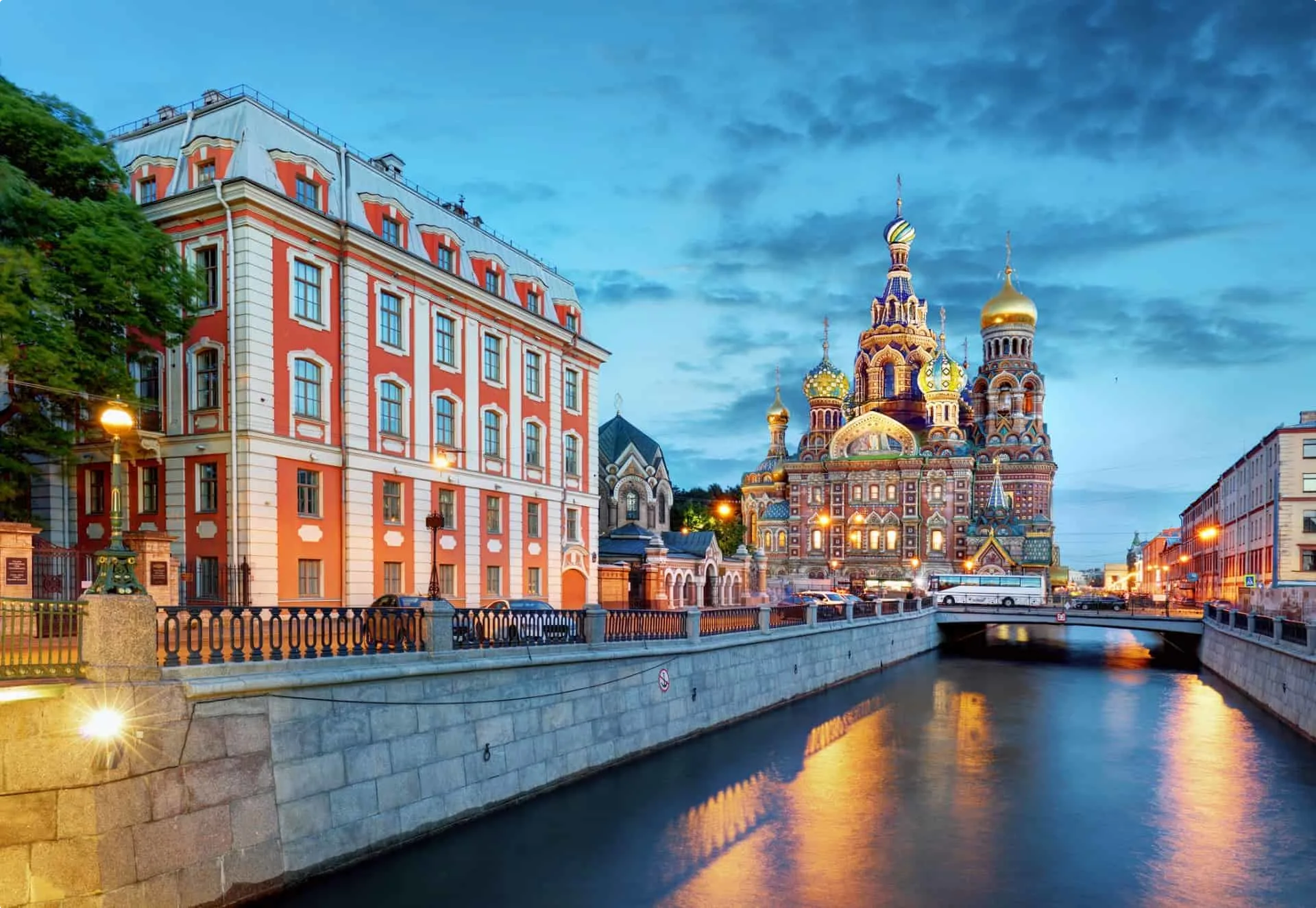
Even as far south as Denmark and Scotland, the sun doesn’t go down until 10pm, and the twilight lasts all night long. The Scottish refer to this as the “summer dim.” In St. Petersberg, Russia, a White Nights Festival features all-night concerts and ballets along with a midnight marathon.
In many parts of northern Europe, midsummer is experienced as a “thin” time, when the veil between this world and the spirit realm is believed to be especially porous. In Sweden, people walk barefoot on the solstice through the morning dew, which is believed to have magical qualities bestowing good fortune.
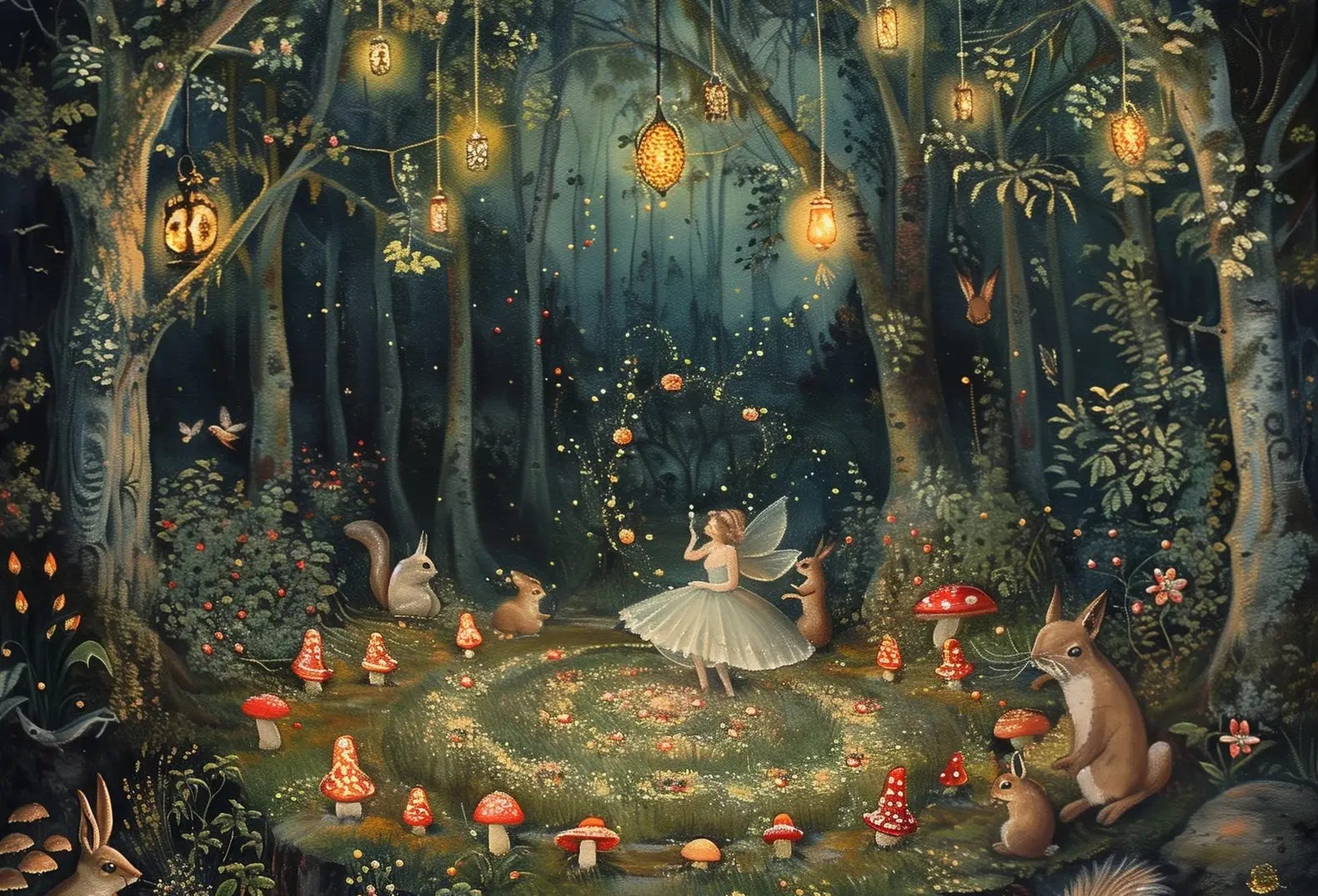
In the British Isles, fairies are thought to travel more freely this time of year, found near springs, meadows, crossroads, and in forest clearings. Since fairies can either be friendly or tricksters, travelers are often warned not to wander alone in the summer evening twilight.
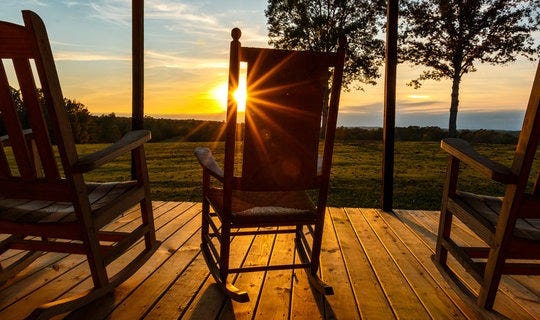
Midsummer also ushers in the hottest part of the year, sometimes referred to as the “dog days” of summer. Whenever I hear this phrase, I always think of an old hound dog with floppy ears sprawled out on a wooden porch, with his humans sitting behind him on a couple of old rocking chairs, sipping iced tea and lemonade.
But the phrase actually derives from ancient Greek astrology: Sirius, the brightest star in the night sky, is also known as the “dog star” because of its position at the heart of the dog-shaped constellation Canis Major. Often referred to as “Orion’s dog,” you can find the dog star following behind Orion in the night sky from December to mid-May. Societies as diverse as the Greeks, Persians, Chinese, and Inuit have all had associations between Sirius and dogs or wolves.
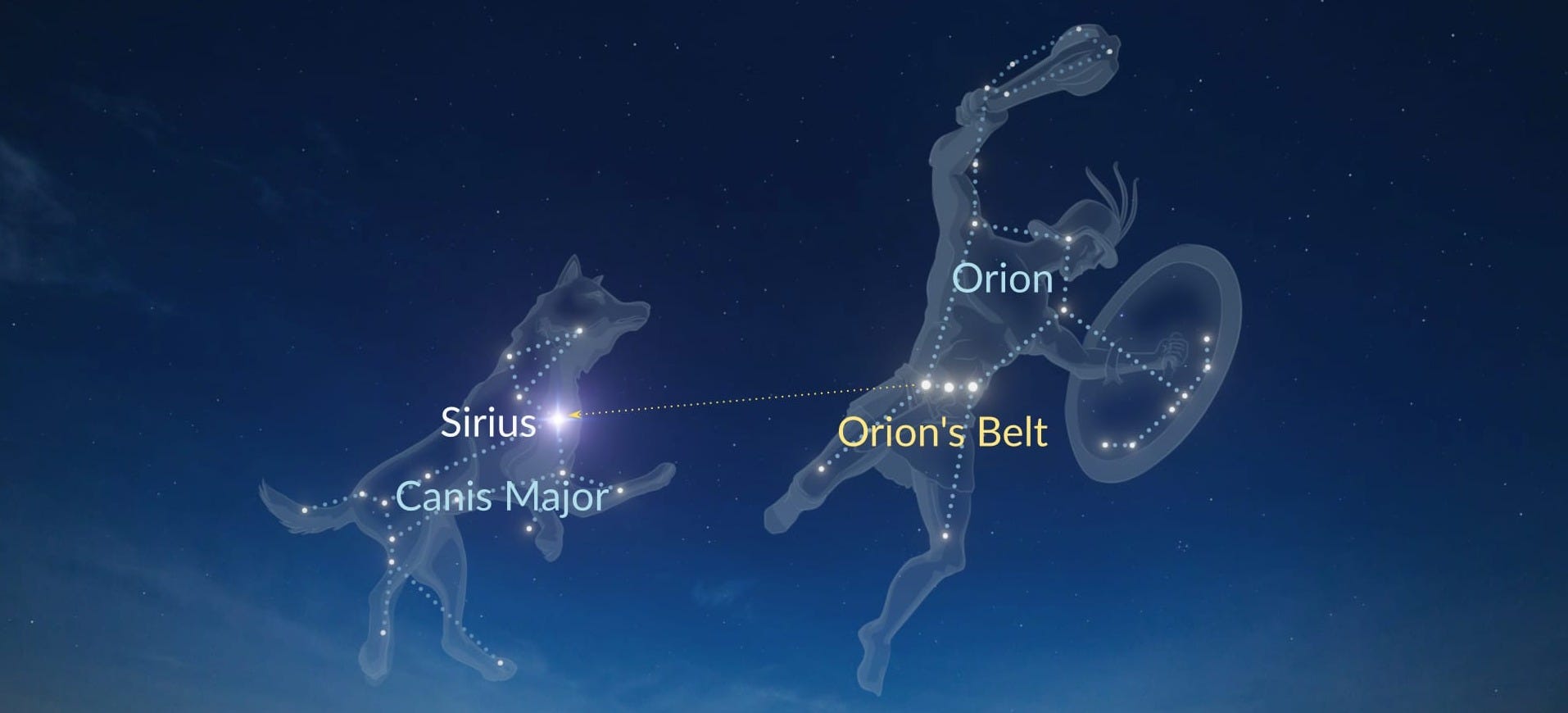
From July 3rd to August 11th in the northern hemisphere, Sirius does not appear at night but rises at dawn, a phenomenon known as “heliacal rising.” This period is referred to as “the dog days” because Orion’s dog literally travels across the sky during the daylight hours this time of year.
The astronomical phenomenon of the brightest star traveling across the sky with the sun during the hottest part of the year made a powerful impression on many ancient stargazers, amplifying themes of light, heat, and passion. For the Egyptians, the heliacal rising of Sirius was a harbinger of the annual flooding of the Nile — a life-giving event essential to Egyptian livelihood. In Greek astrology, it was not only associated with humidity, drought, and thunderstorms, but with lethargy, fever, disease, hysteria, mad dogs, and bad luck (for this reason, it was long held in Western medicine that practices like bloodletting and induced vomiting should be avoided this time of year).
“When the artichoke flowers, and the chirping grasshopper sits in a tree and pours down his shrill song continually from under his wings in the season of wearisome heat, then goats are plumpest and wine sweetest; women are most wanton, but men are feeblest, because Sirius parches head and knees, and the skin is dry through heat.”
—Hesiod
Despite the heat, this is still a time of year when light and life are at their peak, making it the perfect season for reveling in the out-of-doors: bike rides, trips to the beach, lawn games, pool parties, baseball, ice cream, camping, star gazing, sun bathing, bird watching, bug catching, fly fishing, tree climbing, and spending long hours on a picnic blanket staring at the clouds.
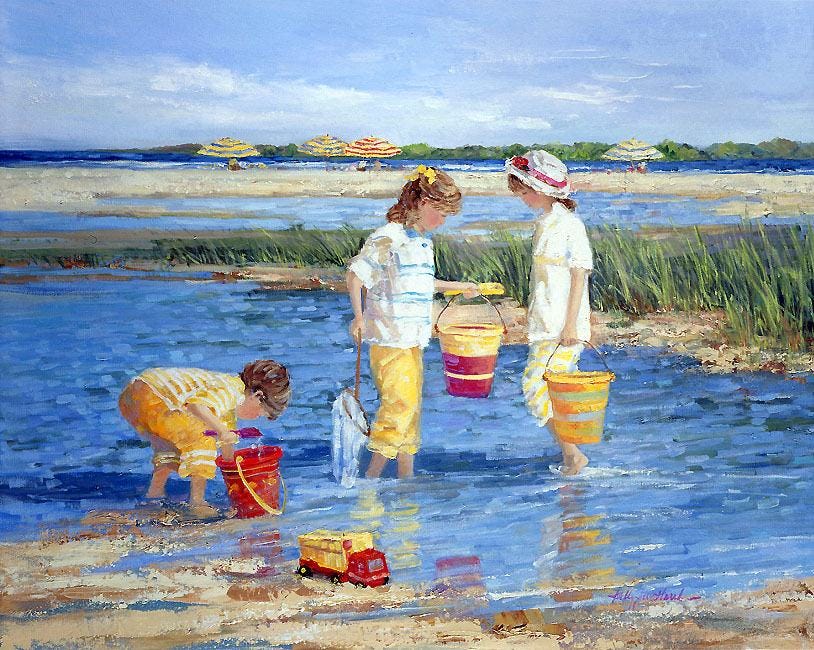
It is also a time for rocking chairs, porch swings, hammocks, and benches — in other words, a time for slowing down, taking in the scenery, and embracing the simple pleasures of creaturely existence.
In the Christian church calendar, the summer months overlap with a liturgical season known as “Ordinary Time,” symbolized by the color green to emphasize the earthly nature of embodied Christian faith, and the activity of God in the material world. During ordinary time, we are invited to slow down and embrace postures of simplicity, consistency, gratitude, and rest. The Rev. Claude Atcho writes, “In this season, we find where the life of Jesus intersects with the lives we inhabit. We seek Jesus in the mundane and discover that this, too, is holy ground.”
The word “ordinary,” from the proto-Italic root ordn- meaning “a row, line, series, pattern, arrangement, or routine,” is associated with the practice of weaving threads on a loom to create a uniform pattern. Ordinary time reminds us that it is through our everyday routines — those steady rhythms of labor and rest — that we weave our deepest purpose by finding the magic in the mundane.
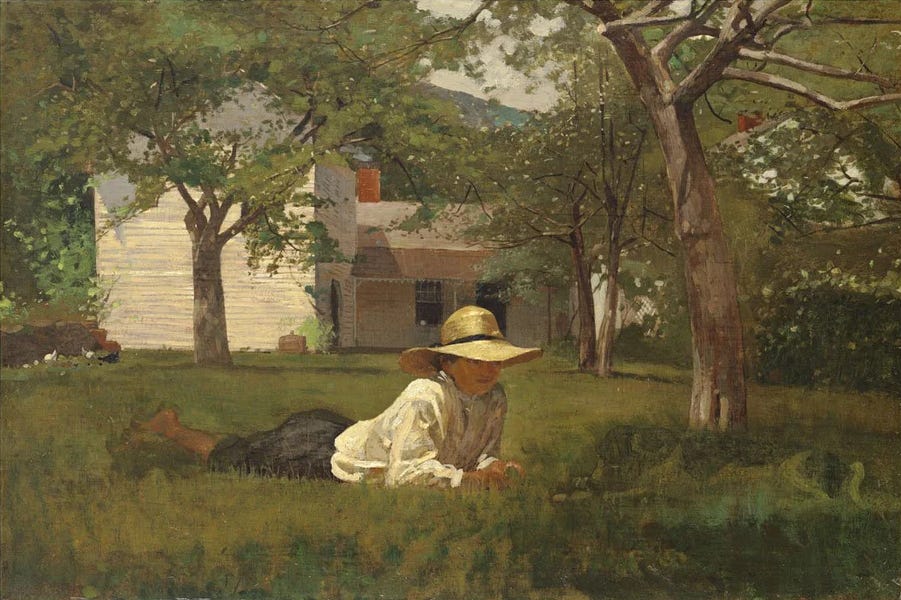
More than any other time of year, this season invites us to stop and “touch grass.” The lazy days of summer encourage us to cultivate within ourselves mental habits of gratitude, trust, and self-restraint that push back against pervasive patterns of anxiety and overconsumption. Choosing a slower and more steady pace is deeply countercultural, drawing us out of the voracious never-enoughness of capitalism and back into material reality, where we can experience for ourselves the simple wonder of being, which is always available to us if we make the time to let it in.
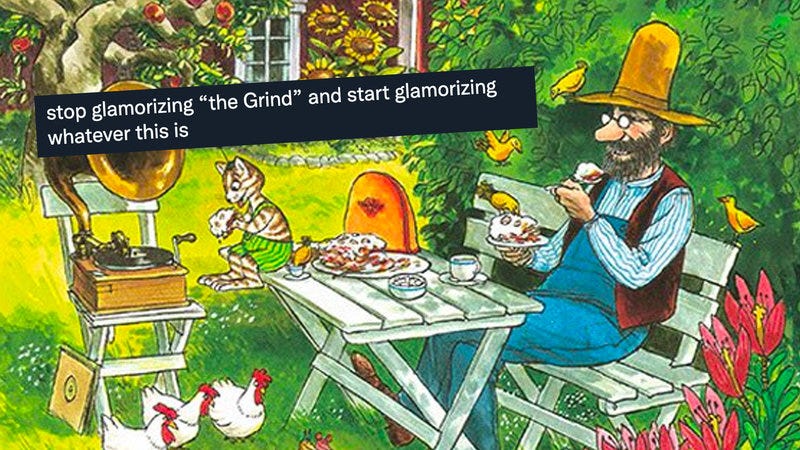
The songs on this playlist try to capture all of these themes:
Seemingly endless days of sunlight that bring a sense of lightness, abundance, and pep in your step
Poolside cocktail parties, easy breezy beaches, and spending long lazy afternoons on the porch
Embracing the slowness of the dog days of summer
Taking the time to marvel in the ordinary and find beauty in the simplicity of life in this material world
*BONUS PLAYLISTS!
If you’re looking for a playlist of popular songs to accompany your summer roadtrip, backyard bbq, pool party, day at the beach, or afternoon picnic — worry not, I’ve got you covered! Select “shuffle” on these playlists and jam on.
Old-school summer tunes for sitting beachside, lakeside, or poolside:

A relaxing and lighthearted mix to accompany your summer picnic:

Backyard BBQ classics and tolerable patriotism for your July 4th cookout:

Acoustic blues and folk for lazy Saturday mornings or summer evenings on the porch:

Classic driving tunes to keep you going on your summer roadtrip:

For those summer days that aren’t so sunny:

Previous Playlists
Annum: Nova

The fourth playlist in the series, "Nova," is meant to capture the transitional season between spring and summer - a time of energy, growth, vitality, fecundity, and high adventure. It is a playlist for May 1 - June 21.
Annum: Bloom

The third playlist in the series, “Bloom,” is meant to capture the bright bursting of light and love and aliveness that marks the arrival of spring. Where I live in central NC, this is a playlist for March 21 - April 30.
Annum: Imbolc

The second playlist in the series, “Imbolc,” is meant to capture the liminal transition between winter and spring. This is the seasoning of “quickening” - a time when the first kicks of new life can be felt. Where I live in central NC, this is a playlist for Feb 1 - March 20.
Annum: Epiphany

The first playlist in the series, “Epiphany,” is meant to capture not only the season of winter, but the beginning of the new year, and the liturgical season of Epiphany. It is a playlist for January.
Music for the Seasons

An introduction to this series of 8 playlists of (non-AI) instrumental background music that has been curated to align with the seasons of the solar year in the northern hemisphere. Articles highlight the themes of each season (changes in the light, temperature, air quality, plant and animal activity) as well as the intersections of each season with adjacent religious holidays and cultural traditions.